In January 1926, Fernando Pessoa founded, together with his brother-in-law Francisco Caetano Dias, the Revista de Comércio e Contabilidade, of which six issues were published, from January to June of the same year. As Pessoa scholar Fernando Cabral Martins informs us, the publication was devoted “to the study of the theory and sociology of commerce and to clarifying problems relating to the organisation of a commercial office”.
The Portuguese researcher further notes that this kind of dedication to the more “concrete” matters of commercial life appears to have (co-)incided with the emergence, in the immediately following years, of the semi-heteronym Bernardo Soares, author of The Book of Disquiet and “an assistant bookkeeper in the city of Lisbon”.
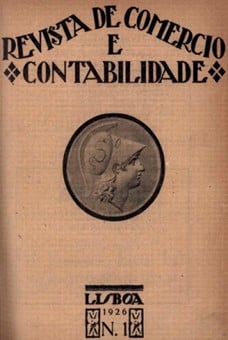
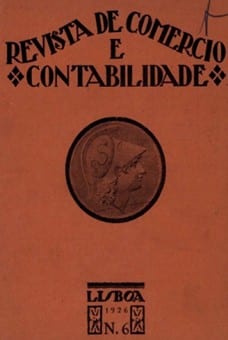
Pessoa’s brother-in-law was the magazine’s director, but its official address was the poet’s home address, at 16 Rua Coelho da Rocha, 1st floor, in Lisbon, where the Casa Fernando Pessoa is now located. It is needless to say that the poet himself was the most prolific contributor of texts to this periodical publication.
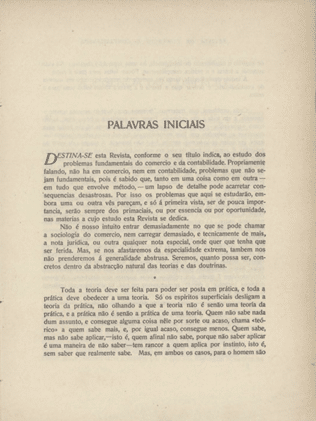
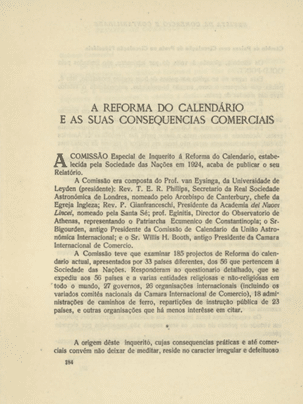
Pessoa published almost thirty texts in the Revista de Comércio e Contabilidade, the first entitled “Opening Words” and the last “Calendar Reform and Its Commercial Consequences”.
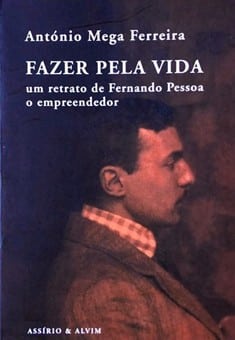
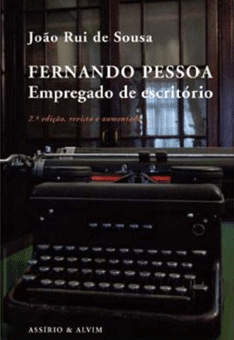
This facet, more oriented towards economic and organisational matters, is reflected not only in the creation of the above-mentioned semi-heteronym Bernardo Soares, but also characterises Fernando Pessoa’s adult life as an entrepreneur, employee and translator of commercial documents and correspondence in various offices and companies in Lisbon’s Baixa. On these themes, among other publications, see “Fazer Pela Vida: um retrato de Fernando Pessoa o empreendedor”, by António Mega Ferreira (2005), and “Fernando Pessoa Empregado de Escritório”, by João Rui de Sousa (2010).
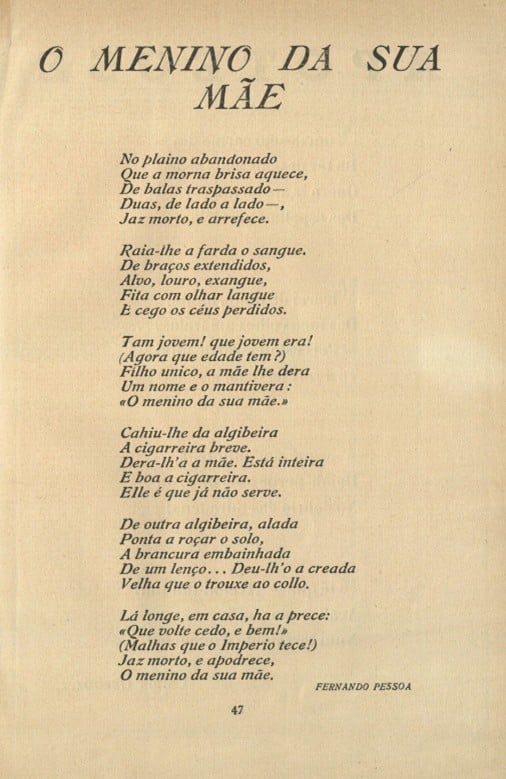
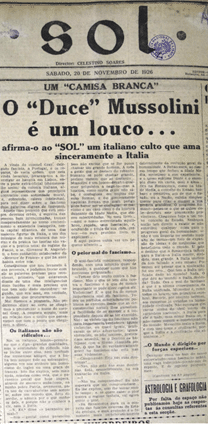
As for Pessoa’s other publications in 1926, in May of that year he published the poem “The Boy of His Mother” in the modernist magazine Contemporânea, and in the same period he signed a statement in O Jornal do Comércio e das Colónias. During the summer, “It Is the Individual Who Counts” appeared in Sol: Bi-semanário Republicano, as did “Augusto Ferreira Gomes Inquiry”, by the heteronym Álvaro de Campos, in A Informação. Also in Sol, Pessoa published the following pieces over the course of the year: “Chronicle – A Great Portuguese”, “Anti-Gazette”, and texts of fierce irony directed at Fascism in Italy, brought to light by the researchers José Barreto and Jorge Uribe: “A White Shirt – ‘Duce’ Mussolini Is mad… an educated Italian who sincerely loves Italy tells Sol” and “The ‘Duce’s’ Madness – Italian Fascists in Lisbon – A denial in the air – The privileges of certain sections of the Press – At night all shirts… are black”.
Returning to Contemporânea, in 1926 it published two of Pessoa’s poetic works which, over the years, have remained among the most significant from a literary and critical standpoint, in the context of Pessoa studies. These are Álvaro de Campos’s poem “Lisbon Revisited (1926)” and the “Rubaiyat” quatrains by Pessoa in his own name, inspired by the poetry of the medieval Persian author Omar Khayyam, one of the intellectual passions of the author of Mensagem.
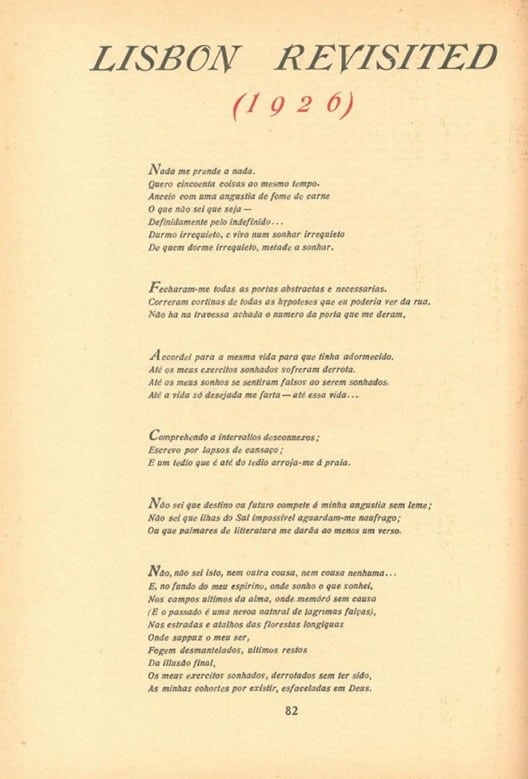
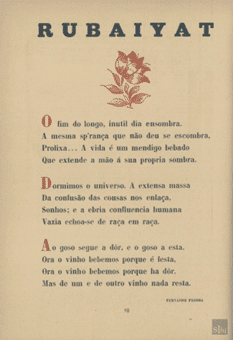
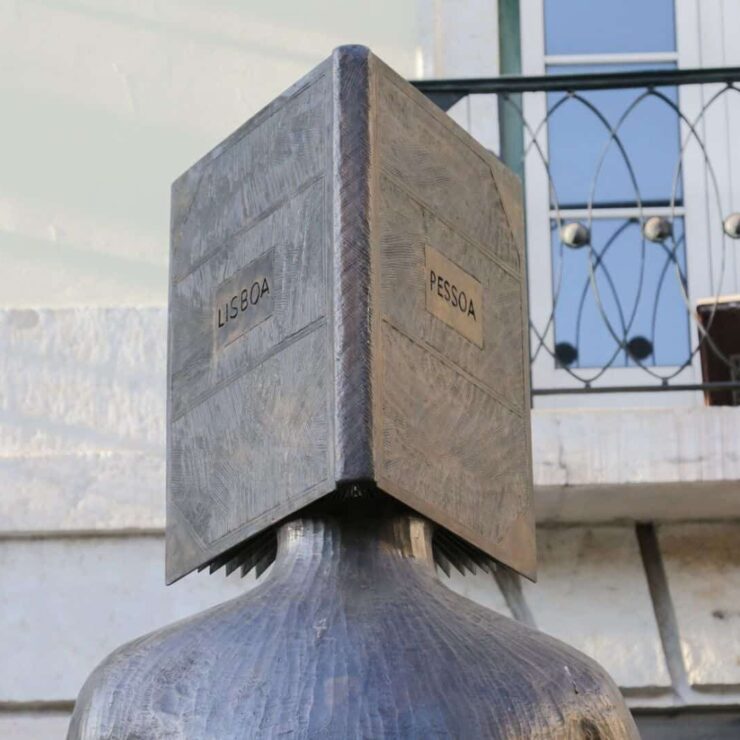
The verses of “Lisbon Revisited (1926)” are among the most eloquent that Pessoa dedicated to the city where he was born, lived for much of his life, and died. At the Lisboa Pessoa Hotel, this Pessoa–Lisbon legacy is celebrated every Friday through the literary tour A Lisboa de Fernando Pessoa, conceived and led by us as part of the hotel’s own Literary Tourism activities. We also wish to highlight that the 1926 sequence of poems “Rubaiyat” was recently republished by us in the anthology of Fernando Pessoa texts entitled O Sábio Árabe: escritos sobre a civilização arábico-islâmica (Shantarin, 2025).
Fabrizio Boscaglia
_
Discover Lisboa & Pessoa from Lisboa Pessoa Hotel, a themed boutique hotel inspired by Fernando Pessoa.